Beyond Infrastructure
A sustainable sports ecosystem requires more than just facilities. Rwanda is implementing a multi-pronged strategy to develop its human capital, creating structured pathways for talent identification and nurturing athletes, coaches, and administrators. This approach combines grassroots school programs with federation expertise and elite international partnerships.
A Structured Approach to Talent Identification
Institutionalizing Scouting within the Education System
The government identified the weak link between schools and formal sports structures. The strategy focuses on institutionalizing talent development within the public education system.
School Sports System (FRSS)
The Rwanda School Sports Federation (FRSS) provides the organizational backbone, running competitions from local sector level up to national championships, creating a clear pathway for identifying promising young athletes.
The ISONGA Program
The cornerstone of the school sports strategy, "Isonga" (meaning "the best of the best"), funded by AFD, establishes "centers of excellence" within 17 public secondary schools. It has rehabilitated playgrounds, identified nearly 600 student-athletes, and trained coaches in football, basketball, volleyball, handball, athletics, and cycling. By integrating elite training with academics, ISONGA provides holistic development, creating a potential long-term talent pipeline.
The Role of National Federations
Managing Disciplines and Developing Talent
Rwanda's 33 national sports federations manage their disciplines, organize leagues, and prepare national teams. Key federations focus on youth development:
- FERWAFA (Football): Manages domestic leagues, including U17/U20 youth championships (boys & girls). A FIFA-backed plan aims to double girls' participation by 2025.
- FERWABA (Basketball): Focuses on skills via youth camps and leagues alongside senior leagues.
- FERWACY (Cycling): Instrumental in cycling's rise, manages the national team, Tour du Rwanda, and oversees the Africa Rising Cycling Center (ARCC) in Musanze, a continental talent hub.
- RAF (Athletics): Aims to make athletics #1 in schools, leveraging high altitude for long-distance training to develop world-class athletes.
Global Partnerships as a Development Accelerator
Using Sponsorships for Elite Knowledge Transfer
Rwanda uniquely uses high-profile commercial sponsorships ("Visit Rwanda") not just for marketing, but as direct investments in human capital via knowledge transfer.
- Arsenal FC: Conducts regular "coach-the-coaches" clinics to embed philosophy and develop a "Rwandan Way," scaling up grassroots coaching quality (e.g., 100 coaches trained/refreshed in April 2024).
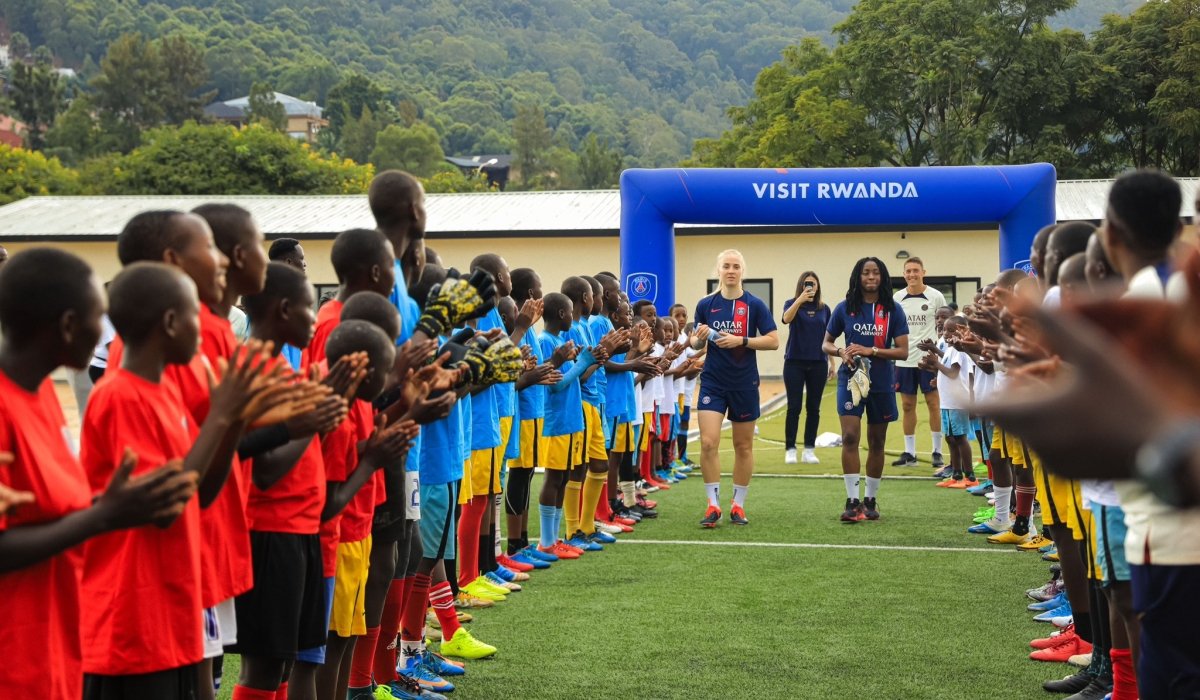
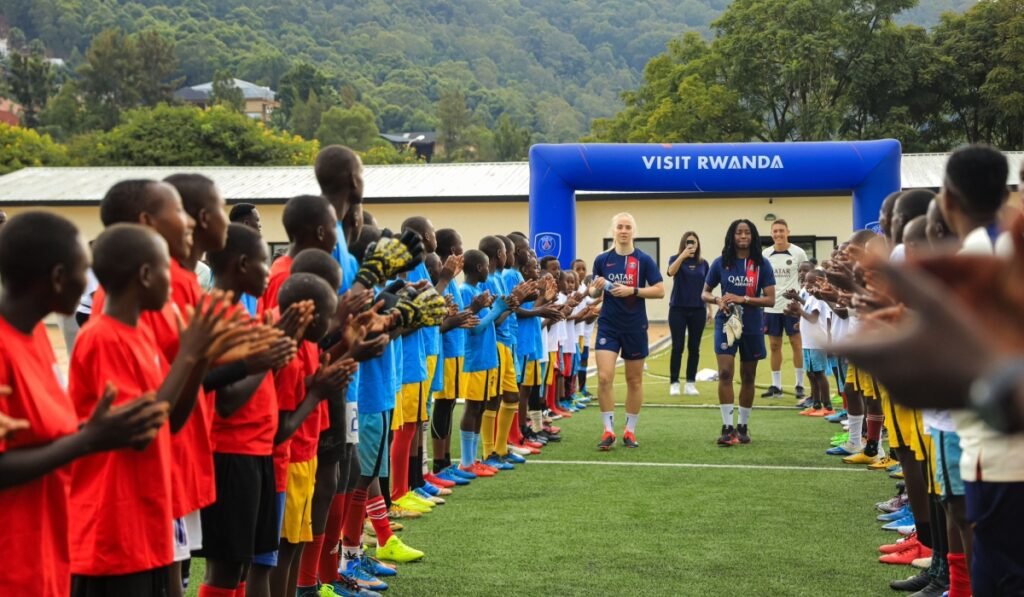
- Paris Saint-Germain (PSG): Established a permanent PSG Academy in Huye (2020), training over 400 youths. Its U13 team won the PSG Academy World Cup in 2022.
- FC Bayern Munich & Atlético de Madrid: Recent partnerships include commitments for academies and access to world-class training.
- NBA and BAL: Collaboration includes youth development, court refurbishments, and coaching clinics alongside hosting the BAL Finals.
These partnerships efficiently purchase access to elite expertise, fast-tracking player and coach development. This strategic use of commercial deals as a "Trojan Horse" for knowledge transfer sets Rwanda's model apart.
Key Takeaways: Talent Development
Goal: Build a sustainable ecosystem producing athletes, coaches, and administrators for national teams and the sports industry.
Strategy: Multi-pronged approach combining schools, federations, and international partners.
School System: FRSS competitions and ISONGA centers of excellence create a structured pipeline.
Federations: Key roles in youth leagues, talent nurturing (e.g., FERWACY's ARCC).
Global Partnerships: "Visit Rwanda" deals (Arsenal, PSG, etc.) strategically used for elite coaching and academy development (knowledge transfer).