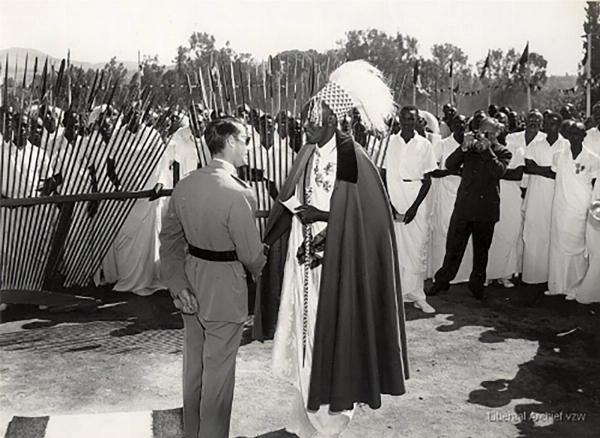
Prior to European colonization, the area of present-day Rwanda was dominated by the Kingdom of Rwanda, a highly centralized and sophisticated state consolidated by the 19th century under Mwami (king) Kigeri Rwabugiri. This kingdom featured a complex social and political hierarchy with the Tutsi king at the apex, treated as a semi-divine figure with authority symbolized by the sacred drum, Kalinga. Beneath him was a Tutsi administrative aristocracy managing tribute collection and district governance.
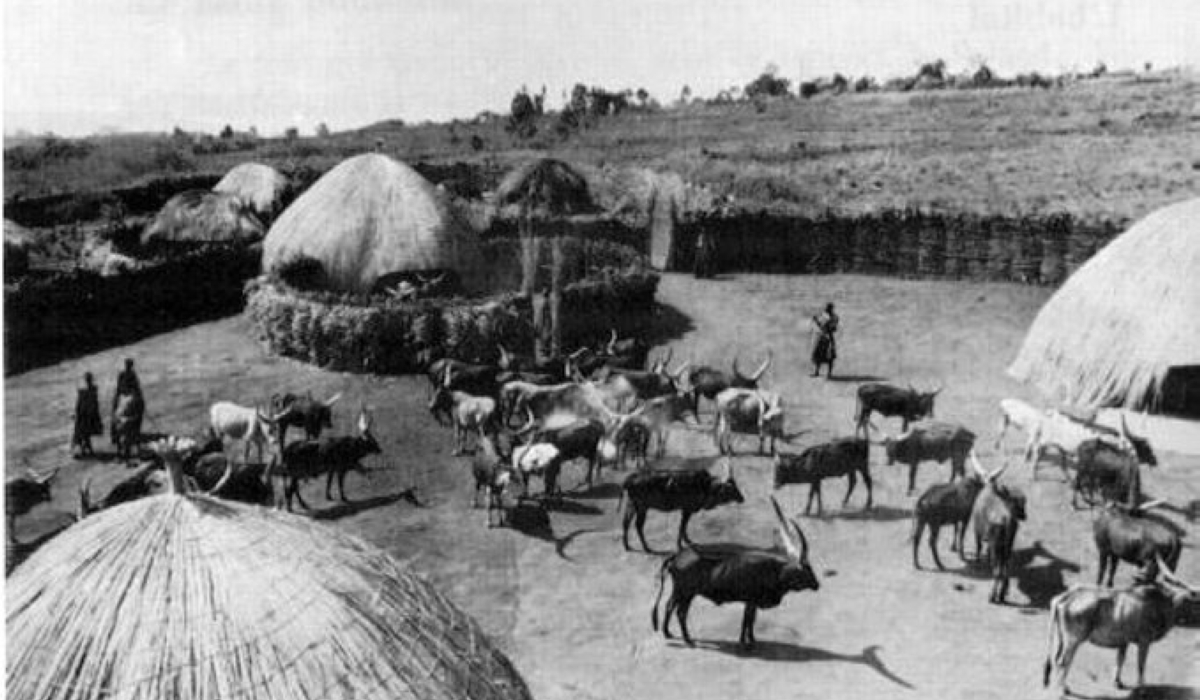
The population consisted of three groups: the Tutsi (predominantly pastoralists and ruling elite), the Hutu (primarily agriculturalists and majority population), and the Twa (small group of forest-dwelling hunter-gatherers). The relationship between Hutu and Tutsi was structured around buhake (the 'cattle contract'), a patron-client system through which Hutu agriculturalists gained protection and social standing by serving Tutsi patrons who controlled cattle—the kingdom's primary wealth. While this created a clear social hierarchy, the categories were not rigid racial identities. Social mobility, though difficult, was possible, and the lines between groups remained fluid.
The arrival of colonial powers—first Germany (1885-1916) and then Belgium (1916-1962)—fundamentally altered this social structure. Influenced by eugenics and racial theories, European administrators misinterpreted these fluid socio-economic categories as fixed, distinct racial groups. They theorized that the Tutsi were a superior 'Hamitic' race of Caucasian origin who had migrated and subjugated the 'Bantu' Hutu. This flawed racial science justified indirect rule through the existing Tutsi monarchy, reinforcing and centralizing its power.
The most catastrophic step was the Belgians' introduction of ethnic identity cards in 1931. This act legally and permanently defined every Rwandan as Hutu, Tutsi, or Twa, transforming a flexible social hierarchy into an immutable, state-sanctioned racial structure. This policy did not create division from thin air, but it hardened existing social distinctions into a rigid political framework, laying groundwork for decades of zero-sum ethnic competition.
The Kingdom of Rwanda and European Colonization
From Kingdom to Colony: Pre-Colonial Social Order and its Politicization
Prior to European colonization, the area of present-day Rwanda was dominated by the Kingdom of Rwanda, a highly centralized and sophisticated state consolidated by the 19th century under Mwami (king) Kigeri Rwabugiri. This kingdom featured a complex social and political hierarchy with the Tutsi king at the apex, treated as a semi-divine figure with authority symbolized by the sacred drum, Kalinga. Beneath him was a Tutsi administrative aristocracy managing tribute collection and district governance. The population consisted of three groups: the Tutsi (predominantly pastoralists and ruling elite), the Hutu (primarily agriculturalists and majority population), and the Twa (small group of forest-dwelling hunter-gatherers). The relationship between Hutu and Tutsi was structured around buhake (the 'cattle contract'), a patron-client system through which Hutu agriculturalists gained protection and social standing by serving Tutsi patrons who controlled cattle—the kingdom's primary wealth. While this created a clear social hierarchy, the categories were not rigid racial identities. Social mobility, though difficult, was possible, and the lines between groups remained fluid. The arrival of colonial powers—first Germany (1885-1916) and then Belgium (1916-1962)—fundamentally altered this social structure. Influenced by eugenics and racial theories, European administrators misinterpreted these fluid socio-economic categories as fixed, distinct racial groups. They theorized that the Tutsi were a superior 'Hamitic' race of Caucasian origin who had migrated and subjugated the 'Bantu' Hutu. This flawed racial science justified indirect rule through the existing Tutsi monarchy, reinforcing and centralizing its power. The most catastrophic step was the Belgians' introduction of ethnic identity cards in 1931. This act legally and permanently defined every Rwandan as Hutu, Tutsi, or Twa, transforming a flexible social hierarchy into an immutable, state-sanctioned racial structure. This policy did not create division from thin air, but it hardened existing social distinctions into a rigid political framework, laying groundwork for decades of zero-sum ethnic competition.

From Hutu Revolution to State-Sanctioned Persecution
Independence and Ethnic Polarization: The Path to Genocide (1962-1994)
In the years leading up to independence, the political winds shifted decisively. The Belgian colonial administration, facing growing anti-colonial sentiment and UN pressure, began viewing the Hutu majority as a more reliable partner for a future democratic state. They transferred support from the Tutsi elite to emerging Hutu political movements, empowering leaders who framed their struggle not only as anti-colonial but also as anti-Tutsi. In 1959, this tension erupted into violent uprising—the 'Hutu Revolution' or 'Social Revolution'—in which Tutsi chiefs and families were attacked, thousands killed, and an estimated 150,000 to 300,000 Tutsis fled into exile in neighboring Uganda, Burundi, and Congo. This event marked the violent dismantling of the Tutsi-dominated monarchy and seizure of power by the Hutu majority. When Rwanda gained independence in 1962, it was as a Hutu-led republic under President Grégoire Kayibanda and his Mouvement Démocratique Républicain-Parmehutu (MDR-Parmehutu). The post-independence era was not one of reconciliation but of entrenched Hutu hegemony and institutionalized discrimination against the remaining Tutsi population. Governments of both Kayibanda (1962-1973) and his successor Juvénal Habyarimana (who seized power in a 1973 military coup) consolidated a political system built on ethnic exclusion. Tutsis faced quotas in education and employment, were purged from military and civil service, and were portrayed in official discourse as foreign interlopers and perpetual threats to the Hutu nation. This period was punctuated by sporadic Tutsi massacres, serving both to terrorize the minority and reinforce Hutu elite power. The decades of persecution and exile gave rise to a new political and military force. In 1987, Tutsi refugees in Uganda—many having fought in Yoweri Museveni's rebel army—formed the Rwandan Patriotic Front (RPF), led by figures like Fred Rwigyema and Paul Kagame. The RPF's stated goals were to overthrow the repressive Habyarimana regime, secure the right of return for all refugees, and establish a government based on national unity rather than ethnicity. On October 1, 1990, the RPF invaded Rwanda from Uganda, initiating the Rwandan Civil War. Habyarimana's regime responded not only with military force but massive escalation of anti-Tutsi propaganda. State-controlled media, particularly Radio Télévision Libre des Mille Collines (RTLM), systematically dehumanized the entire Tutsi population, branding them as 'cockroaches' (inyenzi) and RPF accomplices. This relentless incitement created a psychological environment where mass violence became not only possible but conceivable as patriotic duty, setting the final stage for genocide.
The Genocide and Its Legacy on Modern Governance
The 1994 Genocide Against the Tutsi: Catastrophe and Founding Trauma
The assassination of President Habyarimana on the evening of April 6, 1994—when his plane was shot down over Kigali—served as the immediate trigger for genocide. Within hours, Hutu extremist elements within government, military, and ruling party activated a pre-planned, highly organized campaign of mass murder. Over the next 100 days, an estimated 800,000 to one million Tutsis, along with moderate Hutus opposing the extremist agenda, were systematically slaughtered. The killing was carried out by the Rwandan army, Hutu militias known as the Interahamwe, and chillingly, by hundreds of thousands of ordinary citizens incited by state propaganda to kill neighbors, colleagues, and even family members. The genocide was brought to an end in July 1994 when the RPF captured Kigali and defeated the genocidal regime, forcing leaders and millions of Hutu civilians to flee to neighboring Zaire (now the Democratic Republic of Congo). The RPF inherited a country utterly destroyed. Human capital was decimated, the economy had collapsed, infrastructure lay in ruins, and the social fabric was torn apart by unimaginable trauma. This cataclysmic event became the 'founding trauma' of the modern Rwandan state. The failure of the previous state to protect its citizens—and its active role in their extermination—created a powerful and enduring justification for a new governance model. The RPF's political philosophy is built upon a 'never again' imperative, a solemn vow rationalizing the necessity of a strong, disciplined, centralized state to manage societal divisions, ensure security, and prevent relapse into chaos. This legacy is the lens through which every subsequent political decision—from constitutional design to social policy—must be viewed. The RPF's own identity as the nation's liberator, the force that single-handedly stopped the genocide while the international community stood by, grants it immense moral and political legitimacy. However, its origins as a highly disciplined, hierarchical military movement instilled deep-seated suspicion of internal division and political dissent, which it views not as healthy democracy but as existential threat to national survival. This dual identity is central to understanding Rwanda's modern paradoxes.