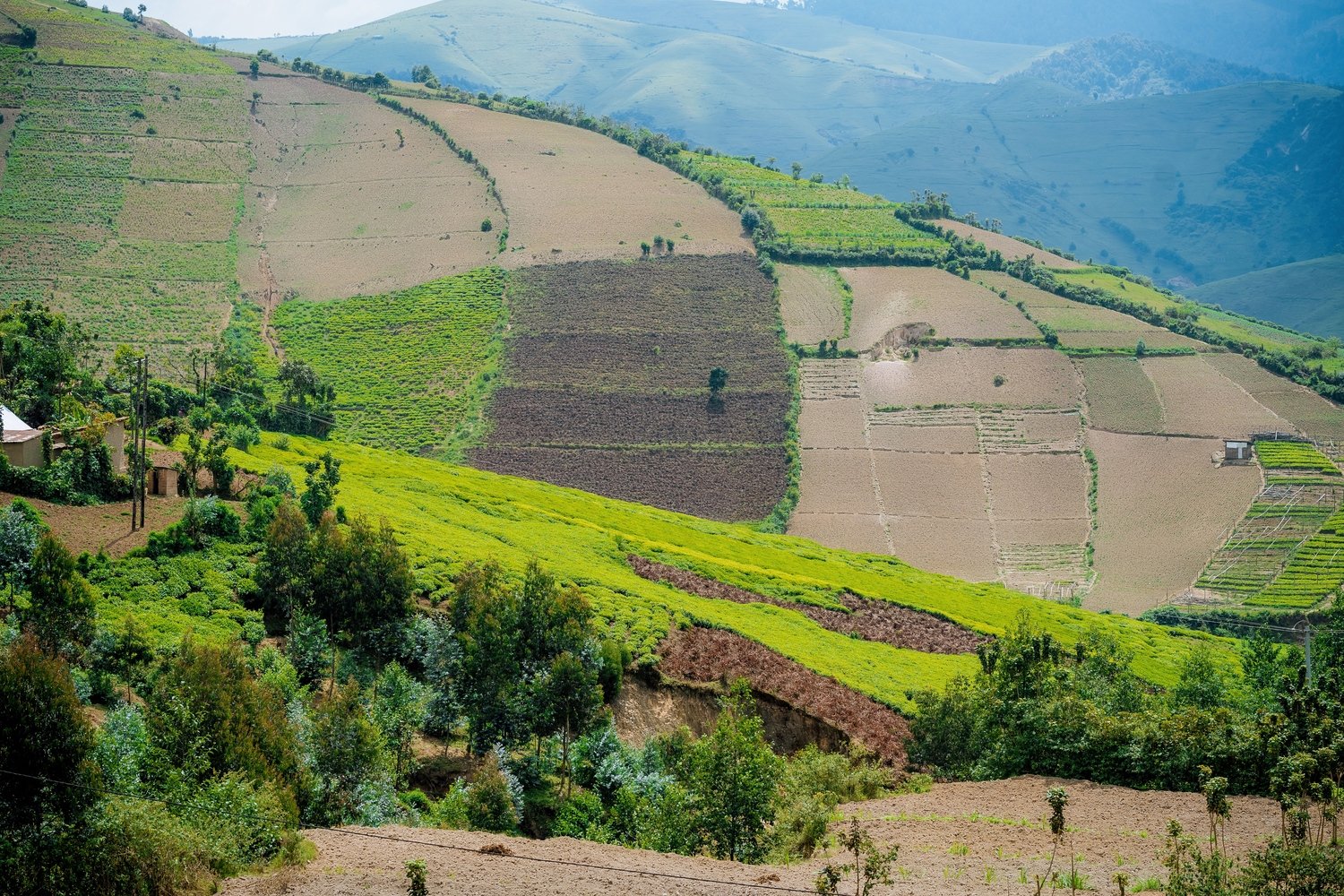
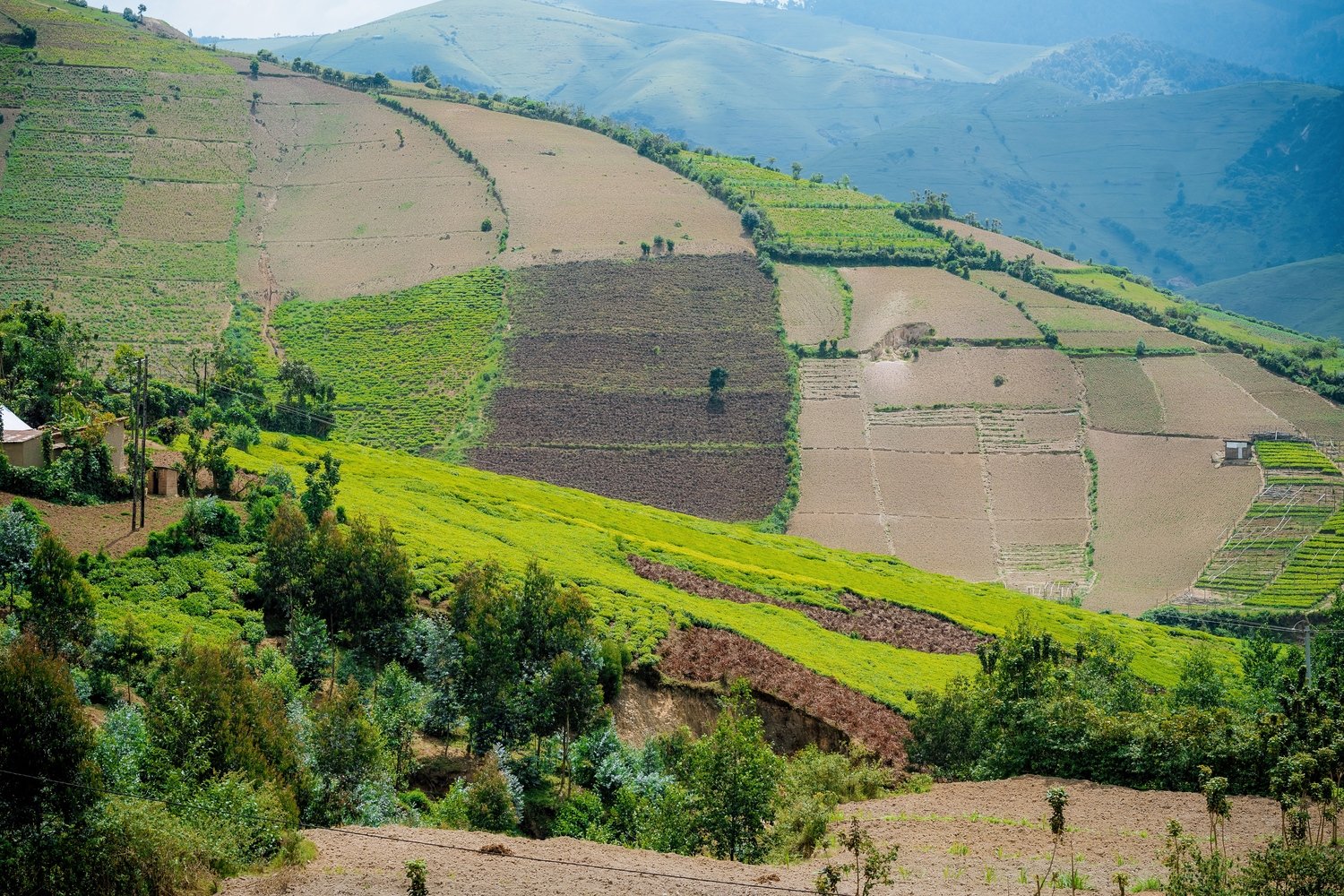

Land consolidation in Rwanda refers to government-led efforts to merge fragmented smallholder plots into larger, contiguous holdings to boost agricultural productivity and attract investment. This strategy is central to agricultural modernization and rural economic development, forming the basis of Rwanda's flagship Land Use Consolidation Program (LUC), launched in 2008.
Overview and Rationale
Land in Rwanda is highly fragmented due to inheritance practices and demographic pressures. This fragmentation has historically limited agricultural efficiency and modernization efforts across the country.
Land consolidation addresses this fragmentation by organizing farmers into groups to cultivate priority crops on merged parcels, which raises efficiency while preserving land rights. The program represents a careful balance between modernization and protection of smallholder interests.
The government focuses on key crops such as maize, beans, potatoes, cassava, rice, and wheat, prioritizing areas most suitable for each. This strategic crop selection ensures optimal use of Rwanda's diverse agro-ecological zones.
Agricultural Benefits and Productivity Gains
Consolidating plots enables the adoption of modern farming techniques, allows for mechanization, efficient input distribution, and coordinated extension services. These improvements represent fundamental shifts in how Rwandan agriculture operates.
There is clear evidence of increased agricultural productivity and higher yields as a result of LUC, with positive effects on food security and rural incomes. Multiple studies have documented these improvements across different regions and crop types.
Specialization enabled by consolidation reduces inefficiencies and supports value chain development, with farmers benefitting from economies of scale and easier access to markets. This creates opportunities for both domestic food security and export-oriented agriculture.
Investment Potential
Land consolidation creates conditions attractive to investors, including larger operational units, simpler aggregation of outgrower schemes, and streamlined administration. These factors significantly reduce transaction costs and operational complexity.
It encourages adoption of improved inputs, technology, and irrigation, underpinning projects requiring significant capital investment or contract farming structures. The consolidated landscape makes Rwanda more competitive for agricultural FDI.
Government incentives, including subsidized inputs and enhanced extension services, further improve the investment climate in consolidated areas. Public-private partnerships are actively encouraged and supported through multiple channels.
Socio-economic Impact
Research indicates that land consolidation correlates positively with socio-economic improvement, as seen in increased household wealth and better livelihoods in districts implementing LUC. The benefits extend beyond pure agricultural metrics to broader quality of life improvements.
The program is linked to rural transformation and market development, with wider economic multiplier effects through supporting sectors like processing and transportation. This creates employment opportunities throughout the agricultural value chain.
Land Policy and Sustainability
Rwanda's land policy explicitly supports consolidation as a tool for sustainable and commercial agriculture, in line with national targets for poverty reduction, food security, and rural urbanization. The policy framework provides long-term certainty for all stakeholders.
Secure land tenure is preserved even with consolidation, reassuring both local stakeholders and external investors. Farmers maintain their land rights while benefiting from collective farming arrangements.
Key Takeaways for Investors
Land consolidation in Rwanda has transformed agriculture into a more attractive, investment-ready sector, characterized by higher productivity, lower transaction barriers, and a government committed to modernization. The program represents one of Africa's most ambitious and successful agricultural transformation initiatives.
The focus on large-scale efficiency, along with clear policy backing and infrastructural support, positions Rwanda as a leading destination for agricultural investment in Africa. The combination of political will, technical capacity, and demonstrated results creates a compelling case for agricultural investors.