
Inside Kigali Special Economic Zone: The Blueprint Behind Rwanda's Industrial Rise
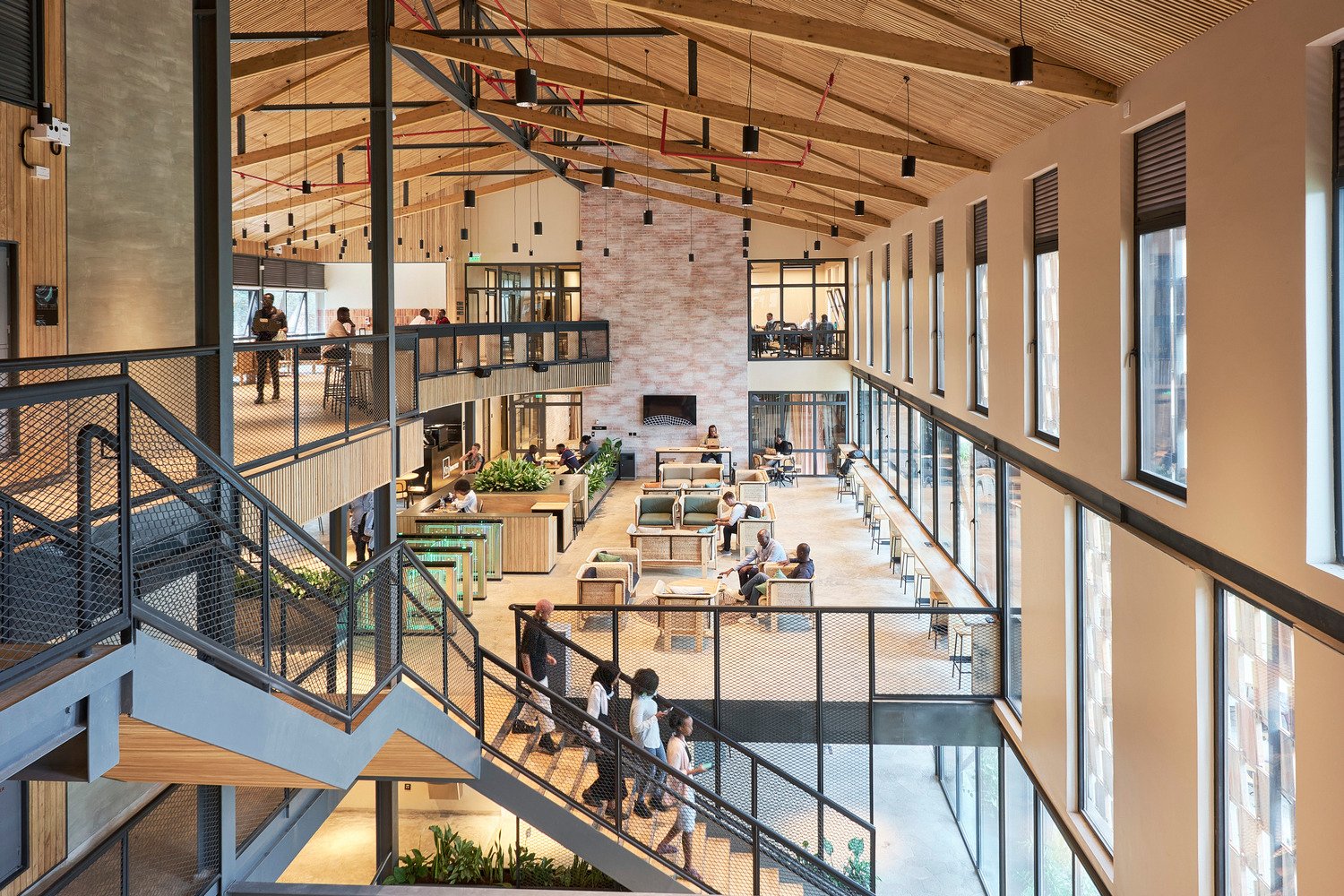
Kigali Special Economic Zone has become one of Rwanda's strongest symbols of industrial ambition. More than an industrial park, it shows how infrastructure, governance, innovation, and long-term planning can turn a small landlocked country into an attractive investment destination.
- →Investor Magnet: Shows how Rwanda combines deliberate planning, infrastructure, and strong governance to attract global capital.
- →Unified Ecosystem: KSEZ connects manufacturing, logistics, tech, and higher education in one hub.
- →Rwanda's industrial model offers lessons for African countries seeking competitiveness under AfCFTA.
On a weekday morning, trucks carrying locally manufactured goods move steadily through the zone's wide industrial roads while engineers, technicians, entrepreneurs, and students travel between factories, research centers, and offices. It is a scene that reflects Rwanda's ambition to combine manufacturing with innovation, creating an ecosystem where production, technology, and investment reinforce one another.
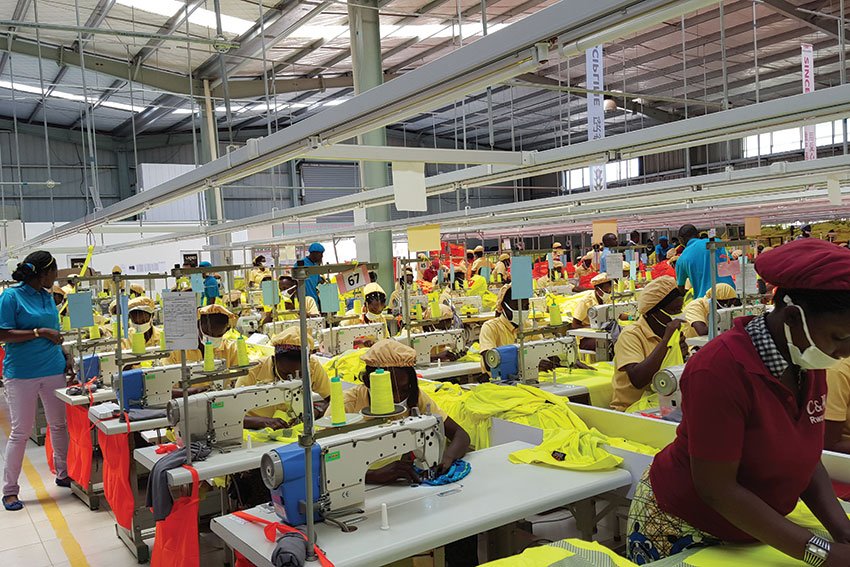
For decades, industrial investment across many parts of Africa was often associated with fragmented infrastructure, lengthy administrative procedures, and uncertainty. Rwanda has sought to challenge that narrative through the Kigali Special Economic Zone, established in 2011 as the country's flagship industrial park. Today, the Zone represents far more than a collection of factories. It has evolved into an integrated industrial ecosystem where manufacturing, logistics, education, technology, pharmaceuticals, and business services operate within a shared environment.
A Business Environment Designed for Investors
Successful industrialization requires reliable infrastructure, efficient institutions, and predictable regulations. The KSEZ brings these elements together. Through its One-Stop Center, investors access key government services in one location, significantly reducing administrative procedures that often delay investments elsewhere.

The physical infrastructure is supported by Rwanda's legal and investment framework. Depending on the scale and strategic nature of the project, qualifying investors benefit from corporate tax incentives, customs advantages for eligible imports, and ironclad investment protections.
An Industrial Ecosystem, Not Just Factories
What truly distinguishes the KSEZ is its sector diversity. Walking through the Zone, you'll see food processors operate alongside pharmaceutical distributors, while logistics companies coordinate regional supply chains.
International brands such as Volkswagen Rwanda have anchored the country's growing automotive sector, while companies like AZAM Rwanda, Yara Rwanda, and logistics operators such as Kumwe Freight demonstrate the breadth of the ecosystem.


“What makes the Kigali Special Economic Zone attractive is not only the land or the roads. It is the absolute predictability of the environment. For global business, knowing exactly where to access services and how to plan expansion without bureaucratic friction matters more than short-term promises.”
AN INTERNATIONAL MANUFACTURING FIRM EXECUTIVE, OPERATING INSIDE PHASE IIWhere Industry Meets Innovation
Factories build products. Ideas build industries. Because of this, Rwanda has deliberately positioned innovation alongside manufacturing.
This vision is anchored by Kigali Innovation City (KIC), a 61-hectare innovation district located directly within the broader KSEZ ecosystem. KIC brings together universities, technology companies, and entrepreneurs. Institutions like Carnegie Mellon University Africa and the African Leadership University develop graduates in engineering, computer science, and artificial intelligence, giving tenants direct access to a highly skilled professional pipeline.


This ecosystem extends beyond the classroom. Internationally recognized initiatives like Zipline's medical drone delivery network demonstrate how technological innovation can solve practical healthcare logistics challenges, improving blood and medical supply to diverse communities. The success of such initiatives has strengthened Rwanda's reputation as a country willing to embrace new technologies while developing regulatory frameworks that encourage responsible innovation.
“This is an innovative effort, the first of its kind on the continent. It will have a Pan-African development impact both in terms of economic and human capital. Our aim is to create a critical mass of talent, research, and innovative ideas that will transform Africa.”
DR. EDOUARD NGIRENTE, FORMER PRIME MINISTER OF RWANDA, DURING A MILESTONE PARTNERSHIP SIGNING WITH AFRICA50
By integrating higher education, research, entrepreneurship, and industrial investment, Kigali Innovation City demonstrates that Rwanda's development strategy extends beyond attracting factories. It seeks to cultivate an environment where innovation itself becomes an economic asset.
One zone, five sectors reinforcing each other.
Governance as Rwanda's Competitive Advantage
Modern industrial zones compete for more than investment capital. They compete for trust.
For businesses making long-term investment decisions, confidence is built through institutions that are transparent, predictable, and capable of implementing policy consistently. Rwanda has recognized that governance itself can become a competitive advantage.

This institutional approach aligns closely with Rwanda's Second National Strategy for Transformation (NST2), running from 2024 through 2029, which identifies industrialization, export growth, and private-sector development as central priorities. To guarantee operational stability, Rwanda's revised Special Economic Zone Policy explicitly mandates structural reliability. The Ministry of Trade and Industry (MINICOM) outlines that success depends on signing MOUs as a matter of priority with all regulatory institutions, setting out clear expectations for their long-term contributions to ensure that administrative processes, utility providers, and trade facilitation remain reliable for investors.
Yet governance is not measured only by expansion. It is measured by accountability.
Recent parliamentary oversight has focused on ensuring that infrastructure within Rwanda's industrial zones continues to meet expected standards as new phases are developed. This ongoing evaluation of utilities, logistics, and operational efficiency reflects an important principle: maintaining investor confidence requires continuous improvement, not simply the construction of new industrial facilities.

Lessons for Africa's Industrial Future
The significance of the KSEZ extends far beyond Rwanda's borders. As African countries seek to strengthen industrialization under the African Continental Free Trade Area (AfCFTA), the Zone offers a practical blueprint of how governance, infrastructure, and investment policy can work together to build a competitive manufacturing ecosystem.
Conclusion
Its success cannot be measured solely by the number of companies it hosts, the value of its exports, or the scale of its infrastructure. Equally important is the environment it has created — one where manufacturers, entrepreneurs, researchers, students, and policymakers contribute to a shared vision of economic development. By bringing these actors together within a single ecosystem, Rwanda has demonstrated that industrialization is not simply about producing more goods; it is about creating conditions in which businesses, ideas, and people can grow together.
The true success of an industrial zone is not the number of buildings it contains, but the opportunities it creates beyond its gates. As Africa writes its next chapter of growth and development, KMT Discovery offers not a finished story, but a blueprint still being built.
- Igihe — tender notice. igihe.com/IMG/pdf/tender
- Rwanda Development Board — One Stop Centre. onestopcentre.rdb.rw
- Rwanda Development Board — SEZAR Catalogue. rdb.rw — SEZAR-Catalogue.pdf
- Volkswagen Rwanda. volkswagen.rw
- Carnegie Mellon University Africa — Kigali Innovation City. africa.engineering.cmu.edu — Kigali Innovation City
- Africa50 — Kigali Innovation City project. africa50.com — Kigali Innovation City
- Rwanda Ministry of Environment — NST2 strategy. environment.gov.rw — NST2
- Rwanda Development Board. rdb.rw